
What to Pack for a Masai Mara Safari can feel confusing because the trip is both rugged and refined. You may start the day in a cold open vehicle, photograph wildlife in dusty heat by noon, and return to a beautiful lodge for dinner. This guide helps you pack lightly, comfortably, and intelligently without carrying things you will never use.
What to Pack for a Masai Mara Safari: The Simple Rule
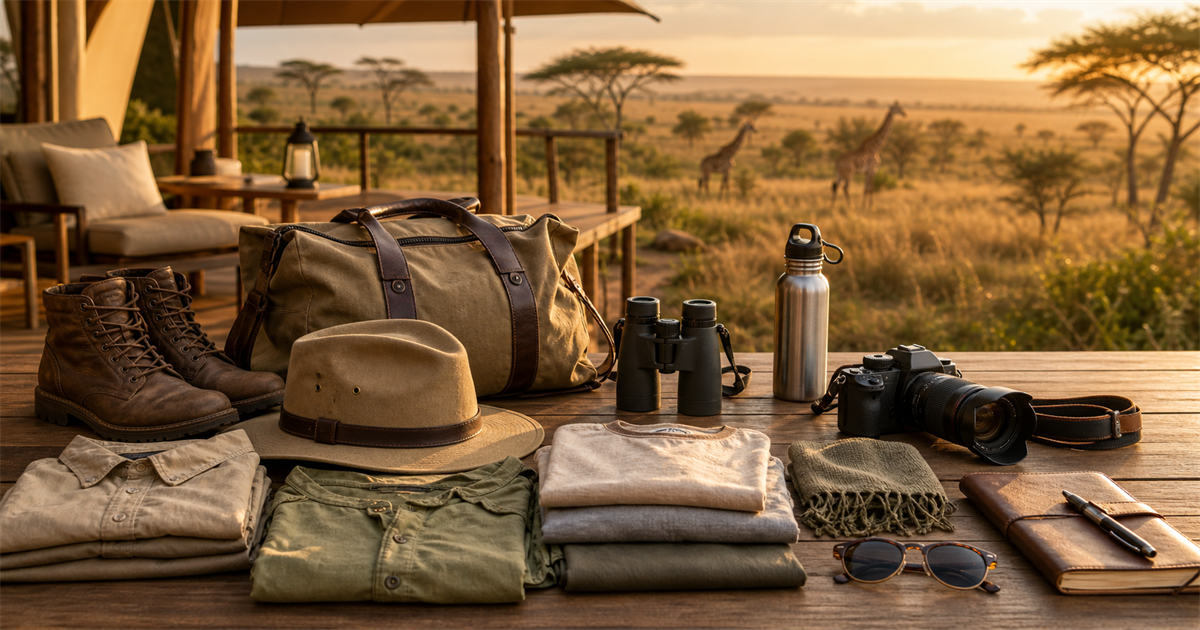
The simple rule is to pack for layers, dust, sun, early starts, and limited luggage space. Safari style is not about dressing dramatically. It is about staying comfortable while moving between cool mornings, warm afternoons, occasional rain, and relaxed lodge evenings.
Neutral colors work best. Khaki, olive, tan, stone, grey, and soft brown are practical because they hide dust and sit quietly in the landscape. Bright white gets dirty quickly. Very bright colors can feel out of place around wildlife. Dark black or navy can absorb heat and may attract insects more than lighter tones.
The Masai Mara is famous for wildlife, but the experience is still a travel day in the bush. Roads can be bumpy. Dust enters bags and camera cases. Laundry may be available at lodges, though it can depend on weather, culture, and camp policy. Therefore, your packing list should be compact, repeatable, and easy to manage.
If you are still choosing the route, browse our Kenya safari packages first. A fly-in safari, road safari, family safari, and honeymoon safari each change the ideal packing list.
Start With the Luggage Rules
Before choosing outfits, check how you will reach the Mara. If you are flying by light aircraft, soft-sided luggage is usually essential. Hard suitcases may not fit easily into small aircraft holds. Weight limits can also be strict. Your quote or ticket should confirm the exact allowance.
For road safaris, luggage rules are more flexible, but smaller soft bags are still easier. They fit better in safari vehicles and lodge rooms. They are also easier for staff to handle. A large hard suitcase may be possible, but it is rarely pleasant in a vehicle packed with camera gear, water, jackets, and day bags.
Use packing cubes or simple fabric pouches. They help separate clean clothing, warm layers, toiletries, chargers, and laundry. Put anything that might leak inside a sealed bag. Dustproof pouches are useful for electronics and medication.
Bring one small day bag for game drives. It should hold a camera or phone, sunscreen, lip balm, sunglasses, a warm layer, personal medicine, tissues, and a water bottle. Keep it light enough to sit comfortably by your feet in the vehicle.
Clothing for Game Drives
Game drives begin early because wildlife is more active before the heat builds. In the Mara, mornings can feel surprisingly cold, especially in an open-sided vehicle. You may leave camp in a jacket and remove layers by mid-morning. This is why a light layering system works better than one heavy item.
Pack breathable shirts with long sleeves. They protect from sun, reduce insect exposure, and still feel comfortable when temperatures rise. Quick-dry fabrics are useful, but natural cotton can also work if it is not too heavy. Avoid delicate fabrics that snag easily or need special care.
Bring comfortable trousers or safari pants. Shorts can be fine in camp, but long trousers are better for early drives, sun, dust, and insects. If you prefer dresses or skirts for lodge time, keep them simple and practical. You do not need formal clothing unless your itinerary includes a city dinner or special event.
A fleece, light insulated jacket, or warm sweater is essential. Add a lightweight rain shell if traveling in shoulder or green season. Even in dry months, a compact shell can block wind during morning drives.
| Item | Recommended Quantity | Why It Helps |
|---|---|---|
| Long-sleeve neutral shirts | 3 to 5 | Sun protection, dust control, and repeat wear |
| Safari trousers | 2 to 3 | Comfort in vehicles and protection from insects |
| Warm layer | 1 to 2 | Cold early mornings and windy drives |
| Light rain shell | 1 | Useful in green season and as a wind blocker |
| Comfortable camp outfit | 1 to 2 | Relaxed meals and lodge time |
| Underwear and socks | Enough for route length | Quick-dry pairs are easiest to manage |
Shoes, Hats, and Sun Protection
You do not need heavy hiking boots for a classic vehicle-based Masai Mara safari. Comfortable closed shoes or light walking shoes are usually enough. Choose footwear that can handle dust, uneven camp paths, and short nature walks if included. Break shoes in before travel.
Sandals can be useful in camp, but they should not be your only footwear. Some lodges have gravel paths, wooden decks, or uneven walkways. Closed shoes are safer after dark and more practical during transfers.
A wide-brimmed hat is one of the most useful items you can bring. It protects your face and neck during open-vehicle drives. A cap is better than nothing, but it leaves ears and neck exposed. Sunglasses with good UV protection are also essential. Polarized lenses can reduce glare on bright plains.
Pack sunscreen and apply it before the morning drive. The sun can be strong even when the air feels cool. Lip balm with SPF is easy to forget and very helpful. If you burn easily, consider a lightweight neck gaiter or scarf.
Camera Gear and Electronics
The best camera is the one you can use comfortably. Some guests bring professional camera bodies and long lenses. Others use phones and still come home with meaningful images. Your packing choices should match your skill, interest, and patience.
If you use a camera, bring extra batteries, memory cards, a lens cloth, and a dust blower. Dust is part of safari life. Change lenses carefully and avoid leaving camera bags open in the vehicle. A small dry bag or padded insert can help protect gear during transfers.
For wildlife, a zoom lens is useful because animals may be close one moment and far the next. A phone with a good camera is excellent for lodge scenes, landscapes, and short videos. Bring enough charging cables and a universal adapter if your devices use different plugs.
A power bank is one of the most forgotten items. Some camps run on solar or generator schedules, and power may not be available all night. Charge devices whenever you can. If you use a CPAP machine or other medical device, tell your planner before booking so the camp can be checked properly.
Binoculars: Small Item, Big Difference
Many first-time travelers assume binoculars are optional. They are not essential, but they make the safari richer. Binoculars help you watch birds, distant lions, cheetah behavior, riverbanks, and movement across the plains. They also reduce the need to ask the guide to move closer when staying back is better for the animal.
Some vehicles carry a shared pair, but sharing can be frustrating when everyone wants to look at once. If wildlife viewing matters to you, bring your own. Compact binoculars are fine for casual use. Serious birders may want higher-quality optics.
Children also enjoy binoculars when they are light enough. It helps them participate instead of waiting while adults take photos. For families, simple child-friendly binoculars can turn quiet moments into discovery time.
Health, Comfort, and Personal Care Items
Pack personal medication in your hand luggage, not checked luggage. Keep prescriptions in original packaging if possible. Bring a small first aid kit with pain relief, antihistamines, motion-sickness tablets, rehydration salts, plasters, and any stomach medicine you know works for you.
Talk to your doctor or travel clinic about malaria precautions and vaccines before travel. Advice depends on your health, travel dates, route, and current medical guidance. Do not wait until the last minute. Some precautions require time.
Insect repellent is useful, especially around dawn, dusk, and water. Lodges often provide mosquito nets or room protection, but personal repellent is still worth packing. Also bring hand sanitizer, tissues, and a small pack of wet wipes. These are useful on long drives and picnic stops.
Toiletries should be simple. Many lodges provide shampoo, conditioner, and soap, but bring your preferred products if your skin is sensitive. Use travel sizes and seal liquids carefully. Avoid heavily scented products because they can attract insects and feel strong in a tented room.
Documents, Money, and Travel Admin
Keep your passport, travel insurance details, flight tickets, visa or electronic travel authorization information, and emergency contacts together. Save offline copies on your phone and carry printed copies in case your battery dies. Share key details with someone at home.
Bring a bank card and some cash for tips, small purchases, and personal extras. US dollars are widely used in safari tourism, but bills should usually be clean and recent. Your planner can advise what is practical for your route. Do not carry more cash than you need.
Travel insurance is strongly recommended. It should cover medical emergencies, delays, cancellations, and activities included in your itinerary. If your safari includes ballooning, walking, or flights in light aircraft, check the policy details carefully.
If you are booking with us, our team confirms what is included, what is paid locally, and what you should carry. You can contact our safari team before departure if anything is unclear.
What to Pack for a Masai Mara Safari in Different Seasons
During July to October, mornings can be chilly and days can be dry and dusty. Prioritize warm layers, sun protection, lens cleaning tools, and a scarf or buff for dust. This is also peak migration season, so camera batteries and memory cards matter.
In January to March, conditions are often warm with strong light. Breathable clothing and sun protection are important. Even so, keep a warm layer because early starts can still be cool. Landscapes may be clearer, which is excellent for photography.
During green-season months, add a light waterproof shell and shoes that can handle damp paths. A dry bag for electronics is useful. Avoid packing too heavily, though. You still need mobility and easy transfers.
The official Magical Kenya information on the Maasai Mara is a helpful destination reference, but packing should always be matched to your exact dates, camp style, and travel route.
Luxury Safari Packing: What Changes?
Luxury does not mean you need formal clothing. Most safari camps remain relaxed. However, premium lodges may make you want one or two polished outfits for dinner, photos, or private sundowners. Choose soft, packable pieces that do not wrinkle badly.
A lightweight scarf, linen shirt, simple dress, or clean neutral trousers can elevate dinner without adding bulk. Avoid high heels. Decks, gravel, and camp paths are not designed for them. Comfortable flats, sandals, or clean loafers are better.
Luxury travelers should also think about comfort items. If you sleep better with a particular eye mask, earplugs, pillow spray, or supplement, pack it. Camps can be peaceful, but wildlife sounds, wind, and early wake-ups are part of the magic. A few small comfort items can improve rest.
If you are planning a honeymoon or milestone trip, tell your planner. We can suggest lodge styles and extras that affect what you pack. You can also explore different safari styles before deciding.
Family Safari Packing Tips
Families should pack for comfort, patience, and quick access. Children may need extra snacks, a familiar hoodie, simple games, wipes, and a small notebook. Avoid overloading them with gear. A child who can manage a small day bag often feels more involved.
Bring any child medication you trust from home. Do not assume every specific brand will be easy to find once you leave Nairobi. Also bring spare glasses, allergy medicine, and copies of important medical notes if relevant.
For children, binoculars and a simple wildlife checklist can make slower moments more engaging. A camera or phone with storage can also help them observe rather than simply wait. Keep expectations realistic. Not every sighting will be dramatic, and not every drive should be long.
Private vehicles are usually best for families because they allow flexible return times. If a child gets tired, you can adjust. A shared vehicle may be cheaper, but the pace belongs to the group.
What Not to Pack
Do not pack hard suitcases if your route includes light aircraft unless your operator confirms they are accepted. Do not bring too many shoes. Do not pack formal clothing that needs careful handling. Do not bring drones unless you have clear written permission and understand local rules. In many safari areas, drones are restricted or inappropriate.
Avoid strong perfumes, heavy jewelry, and expensive items you do not need. Safari is active, dusty, and practical. If losing an item would upset you, consider leaving it at home. Camps are comfortable, but you are still traveling through remote areas.
Do not bring camouflage clothing. In some African countries it can be associated with military use, and it is unnecessary for safari. Neutral outdoor colors are better and safer.
Finally, do not pack fear. A well-planned safari has structure, support, and professional guides. Ask questions before you travel, then let the experience breathe.
How to Pack for a Fly-In Masai Mara Safari
A fly-in safari rewards discipline. Use a soft duffel, packing cubes, and minimal shoes. Wear your bulkiest layer on travel days if needed. Keep camera gear compact and protected. Put medication, documents, and one essential clothing change in your hand item.
Check luggage allowance early. If your camera gear is heavy, ask whether extra luggage can be arranged. Do not assume. Small aircraft rules exist for safety and space. Your planner should confirm the details before final payment.
Because fly-in safaris reduce road time, they often suit luxury guests, honeymooners, and travelers with limited days. They also make packing more important. You need less because you move less, but you must pack smarter because the weight allowance is tighter.
How Luxury Safari Tours Helps You Prepare
We do not treat packing as an afterthought. Once your route is confirmed, we help you understand transfer style, baggage limits, camp laundry, weather expectations, and any special notes for your itinerary. A guest flying to the Mara needs different guidance from a guest driving through Amboseli and Lake Nakuru first.
We also tailor advice to the traveler. Photographers need lens and charging strategy. Families need snacks, pacing, and child comfort. Honeymooners may want dinner outfits and lodge photo moments. Older travelers may need medication planning and mobility notes.
If you are still choosing a destination mix, start with our destination guide. If you already know your safari idea, use the request quote form and tell us how you like to travel.
FAQs About What to Pack for a Masai Mara Safari
Can I wear jeans on safari?
Yes, but they are not ideal. Jeans can be heavy, slow to dry, and uncomfortable on warm dusty drives. Lightweight trousers are usually better.
Do I need hiking boots?
Usually no. Comfortable closed walking shoes are enough for most vehicle-based safaris. Hiking boots are only useful if your itinerary includes more active walking.
What colors should I avoid?
Avoid bright white, neon colors, and camouflage. Very dark clothing can feel hot. Neutral colors are the easiest choice.
Will lodges do laundry?
Many lodges offer laundry, but rules vary. Some may not wash underwear for cultural reasons. Weather can also affect drying times. Ask before relying on it.
Should I bring snacks?
Adults usually need fewer snacks than they expect because lodges provide meals and picnic breakfasts. Families may want child-friendly snacks for long transfers.
Can I pack a drone?
Do not bring a drone unless you have confirmed permissions. Drone use is restricted in many wildlife and conservation areas, and it can disturb animals.
Final Packing Checklist
Pack neutral layers, comfortable shoes, sun protection, personal medicine, binoculars, camera gear, chargers, a power bank, travel documents, and a soft bag. Keep your list practical. The best safari packing makes the trip easier without making your luggage heavier.
Need a packing list matched to your exact safari? Browse our safari packages, learn how our team plans each trip, or send us your route and dates. We will help you prepare for the Mara with confidence, comfort, and room in your bag for memories.