
Choosing a Safari Camp is one of the biggest decisions a first-time safari traveler will make because the camp affects wildlife access, comfort, pace, privacy, meals, guiding, and the feeling of every evening. A beautiful itinerary can still disappoint if the camp is in the wrong place or the style does not match how you want to travel.
Choosing a Safari Camp: Start With Location
Location matters more than almost any brochure photo. A camp can have a stunning pool, a romantic deck, and polished rooms, but if it sits far from the wildlife areas you care about, you may spend too much time driving before the real safari begins. This is especially important in the Masai Mara, where reserve access, conservancy access, river areas, airstrips, and gate positions can all affect your day.
First-time travelers often compare camps by room style alone. That is understandable because rooms are easy to judge online. However, safari value is built in the field. You are paying for access, guiding, comfort, logistics, and the ability to enjoy wildlife without feeling rushed. The right camp should support the experience you came for.
The Magical Kenya information on the Maasai Mara shows why this region attracts travelers from around the world. Yet the Mara is not one small place. Where you sleep determines which areas are realistic for morning and afternoon drives.
If you already know you want Kenya but not the exact route, compare our destination pages before choosing accommodation. A camp that is perfect for a Mara-only safari may not be right for a circuit that includes Amboseli or Lake Nakuru.
Reserve, Conservancy, or Private Land?
The Masai Mara National Reserve is the classic wildlife heart of the ecosystem. Camps with good reserve access can place you close to famous plains, predator areas, and seasonal migration routes. This is valuable for travelers who want an iconic first safari and strong general wildlife viewing.
Private conservancies around the reserve offer a different strength. They often allow fewer vehicles at sightings, night drives, guided walks, off-road flexibility where permitted, and a more private atmosphere. Conservancy camps can feel quieter and more intimate, especially for honeymooners, photographers, and guests who dislike crowds.
The best choice depends on priorities. If river-crossing access during migration is your central goal, your planner should study reserve location carefully. If privacy, guiding depth, and varied activities matter more, a conservancy may be ideal. Some itineraries combine both. This can be a strong solution because you experience the classic reserve and the quieter conservancy rhythm.
Do not assume one is always better. Ask what activities are included, how long transfers take, where game drives happen, and whether reserve fees or conservancy fees are included in the quote. A lower nightly rate may not be lower once access fees and transfers are added.
Lodge, Tented Camp, or Mobile Camp?
Safari accommodation comes in several styles. A lodge usually has more permanent structures, larger public areas, and sometimes a pool, spa, gym, or family-friendly facilities. Lodges can be excellent for guests who want stability, larger rooms, and a familiar hotel-like feeling.
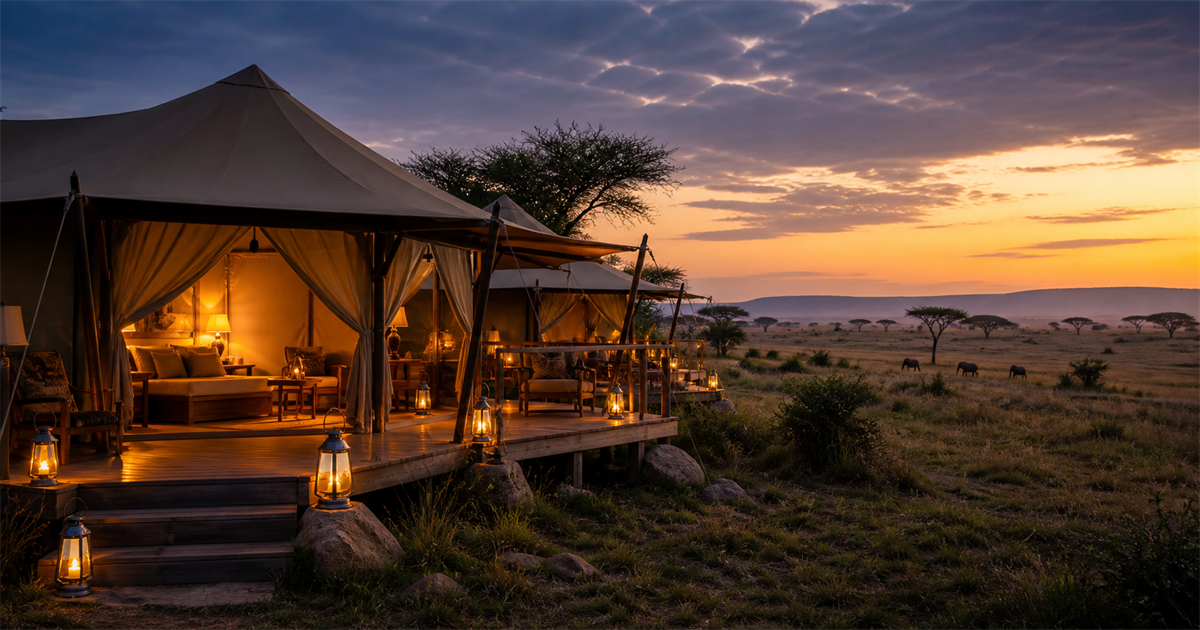
A tented camp is not the same as basic camping. Many luxury tented camps have proper beds, ensuite bathrooms, hot showers, beautiful dining, and attentive service. The difference is atmosphere. Canvas lets you feel closer to the landscape. You may hear lions, hyenas, wind, and birds more clearly at night. For many travelers, that is the magic.
Mobile camps are more seasonal or lightweight. They can be wonderful for adventurous guests who want to follow wildlife movement or enjoy a simpler bush experience. However, they may not suit travelers who want strong amenities, a pool, or polished interiors.
First-timers should be honest about comfort. There is no prize for pretending to be more rugged than you are. A good safari should stretch your wonder, not your nerves. If you need a proper bathroom, reliable charging, and a strong bed, say so. If you want the romance of canvas and lanterns, say that too.
| Camp Style | Best For | Watch For |
|---|---|---|
| Safari lodge | Families, comfort-focused travelers, guests wanting more facilities | Can feel larger or less intimate |
| Luxury tented camp | Honeymoons, classic safari atmosphere, wildlife immersion | More wildlife sounds and canvas living |
| Conservancy camp | Privacy, fewer vehicles, night drives, walking options | May need extra planning for reserve visits |
| Mobile camp | Adventurous travelers and seasonal wildlife focus | Fewer amenities and simpler infrastructure |
Comfort Level: Luxury, Mid-Range, or Value?
Luxury safari camps offer more than beautiful rooms. True luxury includes strong guiding, thoughtful hosting, smooth logistics, excellent meals, good location, reliable communication, and the feeling that details are handled before you ask. A high price should translate into a better experience, not only a prettier bathroom.
Mid-range camps can be excellent value when they have good guiding and location. They may not offer the same design, privacy, or menu polish, but they can deliver superb wildlife experiences. For many travelers, a well-chosen mid-range camp is better than a luxury property in the wrong place.
Budget camps can make safari more accessible, but first-time travelers should understand tradeoffs. Drives may be longer, vehicles may be shared, facilities may be simpler, and food may be basic. That does not make them bad. It simply means expectations need to match the price.
When comparing quotes, ask what the price includes. Park fees, conservancy fees, drinks, laundry, transfers, internal flights, and premium activities may be included at one camp and extra at another. SafariBookings’ Masai Mara tour listings can help you see how varied pricing can be, but a tailored quote explains what fits your exact dates.
Guiding Quality Is the Hidden Difference
A guide can transform a safari. A strong guide understands animal behavior, vehicle positioning, guest pacing, safety, photography angles, birdlife, tracks, and the rhythm of the landscape. They know when to wait, when to move, and when to leave a crowded sighting for a better opportunity.
First-time travelers sometimes focus on the camp and forget the guide. This is a mistake. You may spend more waking hours with your guide than in your room. Ask whether your safari includes a private guide or shared guiding. Ask about language, guiding experience, vehicle type, and whether the same guide stays with you throughout the route.
Shared vehicles can reduce cost, but they also require compromise. If one guest wants birds, another wants cats, and another wants to return early, the guide must balance everyone. A private vehicle gives you control over pace, stops, photography, and family needs.
For photographers, guiding quality is especially important. Finding animals is only the beginning. A good guide thinks about light, background, patience, and respectful distance. They help you get better images without pressuring wildlife.
Food, Meals, and Dietary Needs
Meals shape the comfort of a safari more than many guests expect. Early departures may include packed breakfasts. Long days may include picnic lunches. Evenings may be three-course dinners, relaxed buffets, or private meals depending on the camp style.
If you have dietary requirements, tell your planner early. Vegetarian, vegan, gluten-free, halal, allergy-sensitive, and child-friendly meals can often be arranged, but remote camps need notice. Do not wait until arrival to mention a serious allergy.
Ask whether drinks are included. Some luxury camps include house wines, local beers, soft drinks, and selected spirits. Others charge separately. Premium wines and champagne are often extra. If this matters to your budget, clarify it before booking.
For families, meal timing matters. Children may not enjoy late dinners after long drives. A family-friendly camp should be able to arrange earlier meals or simpler options. This can make the trip much smoother.
Room Design, Bathrooms, and Sleep
Look at the room details carefully. Does the tent or room have an ensuite bathroom? Is the shower indoor or outdoor? Is hot water available all day or by request? Are beds twin, double, king, or family configuration? Is there enough space for luggage?
Sleep quality matters on safari because days start early. Ask about fan or air conditioning if you are sensitive to heat. Many camps rely on natural airflow rather than air conditioning. This can be lovely, but expectations should be clear.
Canvas tents can be romantic, but they also let sound travel. You may hear animals, wind, insects, and camp activity. Some guests love this. Others sleep better in more solid lodge rooms. Neither preference is wrong. The right camp is the one that lets you enjoy the wilderness and rest well.
If mobility is a concern, ask about walking distances, steps, slopes, lighting, and whether escorts are required after dark. Camps vary greatly. A beautiful cliff-top or riverfront camp may not be ideal for everyone.
Safety and Camp Rules
Safari camps take safety seriously, but guests must follow rules. Many camps are unfenced, which means wildlife can pass through. You may need an escort after dark. You should not walk alone outside designated areas. Food should not be left in rooms or bags where animals can smell it.
First-time travelers sometimes feel nervous about tented camps. Professional camps are designed around safety procedures, staff training, and guest briefings. Listen to the arrival briefing. Ask questions. Then relax into the experience.
Vehicle safety also matters. Stay seated unless the guide says otherwise. Do not call to animals, lean out recklessly, or pressure guides to move closer than is ethical. Good safari behavior protects you and the wildlife.
For official travel context, the Kenya Tourism Board is a useful authority source, while your operator should handle route-specific safety and logistics.
Choosing a Safari Camp for the Great Migration
Migration season adds another layer. If your goal is the Great Migration, camp location becomes even more important. You want sensible access to areas where herds may gather, while still understanding that movement is never guaranteed.
Do not choose a migration camp only because it has a famous name. Ask how long it takes to reach likely crossing zones. Ask whether the camp is inside the reserve, near a gate, or in a conservancy. Ask whether you will use road transfers or a nearby airstrip.
During peak months, availability is limited and rates rise. Book early if you want specific camps in August or September. If your budget is fixed, consider early July, October, or a mixed itinerary that balances cost and access.
Migration safaris also require patience. A camp with good hosting and comfortable downtime matters because you may spend long hours out and then need real rest. The best migration camp is not only close to action. It also helps you recover between drives.
Choosing a Safari Camp for Families
Families should prioritize safety, flexibility, room setup, food, and pacing. Ask whether the camp accepts children of your child’s age. Some camps have minimum age rules, especially for walking safaris or certain tent layouts.
Family tents, interconnecting rooms, swimming pools, child-friendly meals, and shorter drive options can make a big difference. A private vehicle is strongly recommended for many families because it lets you return early or pause when children need a break.
Guides who work well with children are valuable. They can explain tracks, birds, insects, and animal behavior in a way that keeps young travelers involved. Safari is not only lions and elephants. It is a whole outdoor classroom.
When planning with children, avoid overloading the itinerary. Two or three well-paced areas are usually better than many rushed stops. You can compare options on our safari type page.
Choosing a Safari Camp for Honeymoons
Honeymoon travelers often want privacy, atmosphere, and service. A smaller tented camp, private deck, outdoor bath, sundowner spot, or special dinner can matter more than checking off every wildlife area. The route should feel romantic, not exhausting.
Ask about room privacy. Some camps have tents close together. Others have wide spacing and private views. Ask whether special meals, bush breakfasts, or private sundowners are possible. Also ask how much driving is involved between locations.
A fly-in safari can be a strong honeymoon choice because it reduces travel fatigue. It can cost more, but it saves time and preserves energy for the camp experience. If budget allows, consider fewer locations and better pacing.
For honeymooners, the right camp is often the one where you would be happy even if wildlife slows down for a few hours. The setting, hosting, food, and room should all feel part of the memory.
Questions to Ask Before Booking
Before booking any safari camp, ask clear questions. Where exactly is the camp? Which reserve or conservancy does it access? Are park or conservancy fees included? How long are transfers? Is the vehicle private or shared? What activities are included?
Ask about meals, drinks, laundry, Wi-Fi, power availability, charging points, and luggage rules. Ask whether the camp has a pool if that matters. Ask about child policies, mobility concerns, and dietary needs. Ask what happens if your preferred camp is unavailable.
Also ask why the planner recommends that camp for you. A good planner should be able to explain the match. They should not only say it is popular. Popular is not the same as suitable.
Planner’s note: The best camp is the one that fits your route, budget, wildlife goals, comfort level, and travel personality. It is rarely the same answer for everyone.
How Luxury Safari Tours Chooses Camps
We begin with the guest, not the property. We ask about dates, budget, group size, mobility, meal needs, wildlife goals, privacy expectations, and previous safari experience. Then we match camp options to the route.
We look at location, access, guiding, room quality, service consistency, vehicle policy, meal flexibility, and value. We also consider the season. A camp that is excellent in one month may be less useful for a specific migration goal in another month.
If a preferred camp is full, we suggest comparable alternatives. We do not force a weak match just because it is available. The goal is a safari that feels smooth from pickup to final breakfast.
You can learn more about our planning style, browse safari packages, or request a quote with your preferred comfort level.
Ethical and Community Considerations
Safari camps are part of wider landscapes and communities. Responsible camps support local employment, conservation fees, respectful cultural experiences, and thoughtful environmental practices. Ask how a camp works with its surrounding community and conservation area.
Not every remote camp can be perfect. Water, power, waste, and supply chains are more complex in the bush than in a city hotel. Still, good camps should show care and improvement. Solar power, refillable water, local hiring, guide training, and responsible waste systems are all meaningful signals.
Cultural visits should be handled respectfully. Guests should not feel that local people are props. If you want a Maasai visit, choose one arranged with consent and fair payment. Ask before taking photos and listen to the guide’s advice.
Wildlife ethics matter too. A camp with strong guiding culture should not pressure animals for guest photos. It should value distance, patience, and rule-following.
FAQs About Choosing a Safari Camp
Is a tented camp safe?
Yes, professional tented camps are designed around safety procedures. Many are unfenced, so guests must follow escort rules and camp briefings, especially after dark.
Should first-timers stay inside the reserve?
It depends on goals. Reserve access is excellent for classic wildlife and migration areas. Conservancies can offer privacy and extra activities. Some first-timers benefit from combining both.
Is luxury worth the extra cost?
Luxury is worth it when it improves location, guiding, rest, food, service, and logistics. A beautiful room alone is not enough. The whole experience should justify the price.
Do camps have Wi-Fi?
Many do, but speed and reliability vary. Safari is remote. If you must work or join calls, tell your planner before booking.
Can dietary needs be handled?
Usually yes, especially with advance notice. Serious allergies, vegan meals, gluten-free diets, and child meals should be discussed before confirmation.
How many camps should I use in one safari?
For first-timers, fewer is often better. Two well-chosen camps can be more enjoyable than four rushed stops. The right answer depends on trip length and route.
Final Advice for First-Time Safari Guests
Choosing a safari camp is really choosing the shape of your days. Think beyond the room photo. Ask where you will drive, how long transfers take, who guides you, what you will eat, how you will rest, and whether the camp fits your travel personality.
Want help choosing the right camp? Explore our safari packages, compare Kenya destinations, or send us your camp preferences. We will help you choose a safari stay that feels comfortable, well located, and genuinely memorable.