
When to See the Great Migration in the Masai Mara is the question most travelers ask when they want a Kenya safari that feels alive, seasonal, and worth the long journey. The honest answer is that timing matters, but it is only one part of the plan. Herds move with rain, grass, pressure from predators, and river conditions. Therefore, the best trip combines the right month, the right camp location, enough nights, and a guide who can read what is happening on the ground.
When to See the Great Migration in the Masai Mara: The Short Answer
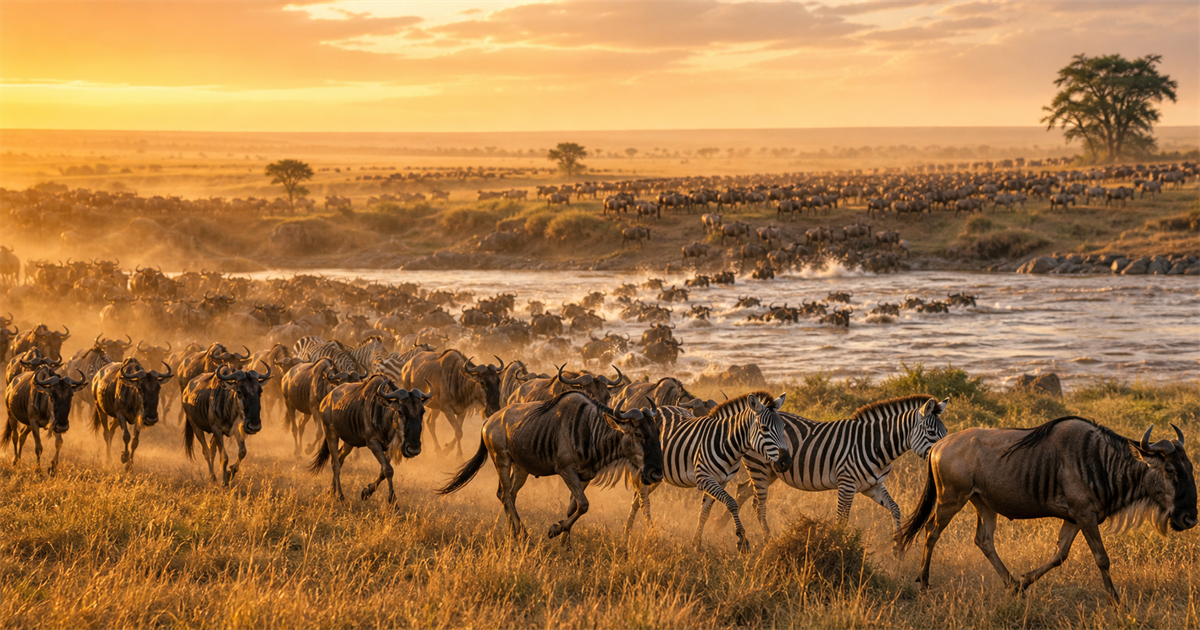
The most popular migration window in the Masai Mara is usually July to October. During these months, large numbers of wildebeest and zebra may move north from Tanzania’s Serengeti into Kenya’s Mara ecosystem. This is the period most travelers associate with river crossings, dust, dramatic predator activity, and wide plains filled with grazing herds.
However, “migration season” is not a fixed appointment. Some years the first herds arrive earlier. In other years, rain patterns hold them south for longer. A crossing can happen in the morning, late afternoon, or not at all on a particular day. That is why a strong itinerary should not sell a guaranteed crossing. It should give you the best possible positioning and enough time for nature to unfold.
The Magical Kenya guide to the Maasai Mara presents the reserve as one of the country’s most important wildlife areas, and this reputation is deserved. Still, the quality of your safari depends on planning detail. A guest staying in the wrong location for only two nights may leave disappointed even in peak season. A guest with four well-placed nights can have an extraordinary trip, even if one crossing does not happen exactly as imagined.
For most travelers, the best advice is simple. Travel between July and October if migration movement is your priority. Stay at least three nights in the Mara. Choose a camp or lodge with sensible access to the areas you want to explore. Then build flexibility into each day.
Why Migration Timing Is So Hard to Predict
The Great Migration is a natural movement, not a show. Wildebeest and zebra follow grazing and water across a vast ecosystem that crosses a national border. Rain may fall in one area and not another. Grass may recover faster in one section of the plains. River levels may rise or drop. Predators, vehicle pressure, and herd behavior all affect movement.
This is why two travelers can visit in the same month and have very different stories. One person may witness a dramatic Mara River crossing. Another may see immense herds spread across the plains with no crossing at all. Both are genuine migration experiences. The difference is expectation. If your only measure of success is a crossing, you may miss the beauty of the wider event.
Migration planning works best when you think in probabilities. July can be excellent, but it can also be early. August and September are often strong months for crossings and large herds. October can still be productive, especially early in the month, but some herds may begin moving south again depending on rain. November can bring short rains and a different wildlife mood.
That is why our planners treat the calendar as a starting point. We also consider recent movement reports, camp location, airstrip access, road conditions, and your tolerance for long days. You can request a custom safari quote if you want a route built around current timing rather than a generic date range.
Month-by-Month Migration Guide
January to March is not the classic Masai Mara migration window, but it can still be a rewarding safari period. Resident wildlife remains in the Mara, and predator sightings can be strong. Travelers who value quieter camps, warm light, and a calmer atmosphere may enjoy this season. It is also a useful period for guests who are not focused on river crossings.
April and May usually bring heavier rains in many parts of Kenya. Some camps close, some roads become more challenging, and itineraries need careful planning. However, green-season safaris can be beautiful for flexible travelers. Landscapes look lush, skies are dramatic, and rates may be softer. If you want a luxury trip with fewer vehicles, this period deserves a conversation.
June is a transition month. The landscape starts drying, visibility improves, and the anticipation builds. Herds may still be in Tanzania or moving toward the border. A June safari can be excellent for general wildlife and value, but it is usually early for consistent Mara River crossing expectations.
July is the beginning of the main migration conversation. Some years see early movement into the Mara. Other years remain slower until late July. If you choose July, it is wise to avoid a rushed itinerary. A longer stay gives you more flexibility and improves your odds of being in the right place when movement starts.
August and September are often the strongest months for travelers who dream of classic migration scenes. Herds may be spread across the Mara, and crossings are more possible. These months are also peak demand months. Lodges and camps can sell out early, and prices are usually higher. Plan well ahead if you want specific properties.
October can still be excellent, especially in the first half of the month. Herds may remain in the Mara, and the crowds can begin to ease slightly. However, timing becomes more sensitive as the ecosystem responds to rain. By late October, some movement may shift south. This does not make October bad. It simply means your planner should be realistic.
November and December bring short rains, softer light, and a fresh atmosphere. The mega-herds may not be the main attraction, but wildlife viewing can still be strong. This period can suit travelers who want a beautiful Kenya safari without peak migration pressure.
| Month | Migration Outlook | Best Traveler Fit |
|---|---|---|
| January to March | Resident wildlife, fewer migration herds | Photographers, relaxed luxury trips, quieter camps |
| April to May | Green season, rain-sensitive routing | Flexible travelers, value-focused luxury guests |
| June | Transition toward migration season | Guests wanting wildlife without full peak rates |
| July | Possible early herd movement | Travelers with flexible expectations and longer stays |
| August to September | Strong classic migration window | River-crossing hopefuls and first-time Mara guests |
| October | Often good, especially early October | Travelers wanting migration energy with softer crowds |
| November to December | Short rains, resident wildlife focus | Repeat visitors, honeymooners, and relaxed planners |
River Crossings: What Travelers Need to Know
River crossings are the most famous part of the migration, but they are also the least controllable. A herd can gather at a riverbank for hours and then turn away. Another herd may cross quickly when conditions change. Guides must balance patience with respect for wildlife and guest comfort.
The Mara River and the Sand River are the main crossing areas that travelers hear about. Access depends on where you stay, the day’s movement, park rules, and road conditions. A camp near a useful crossing zone can reduce drive time, but it cannot create a crossing. Good location improves opportunity. It does not remove uncertainty.
It is also important to understand the ethics of crossings. Responsible guides should keep distance, avoid blocking animals, and follow reserve rules. A dramatic photo is never worth pressuring wildlife. If a crossing area becomes crowded, a sensitive guide may choose a better angle or wait for a cleaner opportunity. This protects the experience and the animals.
Many guests are surprised to learn that non-crossing days can still be extraordinary. You may find cheetah using termite mounds as lookout points, lions resting near herds, hyena trailing the movement, and zebra grazing in long lines across the plains. A migration safari is not only one river moment. It is a complete wildlife rhythm.
How Many Nights Should You Stay?
Two nights in the Masai Mara can work for travelers with limited time, but it is short if migration is the main purpose. You usually arrive, do one full day, and leave the next morning. If a crossing does not happen during that single full day, the trip may feel rushed.
Three nights is a better minimum. It gives you two full safari days plus arrival and departure game-viewing opportunities. You can explore different zones, wait when guides hear about herd movement, and still enjoy the lodge. Four nights is even stronger during August and September because it gives the landscape time to surprise you.
For photographers, four or five nights may be worth the extra investment. Wildlife photography depends on light, behavior, positioning, and patience. A longer stay also reduces pressure. Instead of racing from one sighting to the next, you can spend meaningful time with a pride, a cheetah family, or a herd gathering near the river.
Families should balance ambition with energy. Early starts, dust, heat, and long drives can tire children. In that case, a private vehicle is valuable because you can return to camp when needed. You can compare family-friendly options through our safari type guide.
Where to Stay During Migration Season
Your camp location can shape the entire trip. Some camps sit inside the Masai Mara National Reserve. Others are in private conservancies bordering the reserve. Reserve camps may offer better direct access to classic migration areas. Conservancy camps often offer fewer vehicles, night drives, walking activities, and a more private atmosphere.
There is no single perfect choice for everyone. If river crossings are your priority, your planner should pay close attention to access and transfer time. If privacy, guiding style, and camp atmosphere matter more, a conservancy may be the better match. Some itineraries combine both, giving you reserve access and a quieter conservancy experience.
When comparing lodges, ask about drive times to key areas, vehicle policy, guide quality, meal flexibility, airstrip access, and whether the camp is open all season. Also ask what happens if herd movement is far from the lodge. A beautiful room matters, but the right location matters more during migration season.
You can browse our Kenya safari packages for starting points, then ask us to adjust camp selection around your migration goals and budget.
Road Safari or Fly-In Safari?
Both options can work. A road safari from Nairobi usually costs less and lets you see more of the country. It can also combine the Mara with Lake Nakuru, Naivasha, or Amboseli. However, road transfers can be long and tiring, especially in peak season or after an international flight.
A fly-in safari saves time and often feels smoother. You land closer to your camp, reduce fatigue, and preserve more hours for game drives. The trade-off is price and luggage restrictions. Small aircraft usually require soft-sided bags and careful packing.
For a migration-focused luxury safari, flying is often worth considering. It can turn a rushed three-night trip into a calmer experience. For a broader Kenya circuit, road travel may make more sense. The right choice depends on your dates, group size, budget, and comfort expectations.
If you want to combine routes, explore our Kenya destination guide and decide whether the Mara should be the whole trip or the grand finale.
Budget, Availability, and Booking Timing
Migration season is one of the most expensive periods in the Mara. Demand rises, camp availability tightens, and premium locations sell early. If you want specific lodges in August or September, start planning many months ahead. Last-minute trips are possible, but choice may be limited.
Your budget should include more than the room rate. Park fees, conservancy fees, vehicle costs, internal flights, transfers, drinks, laundry, tips, and optional activities can change the final price. A quote should explain these clearly. If it does not, ask before paying a deposit.
Travelers sometimes try to save by reducing nights. That can work for a general safari, but it is risky for migration goals. One extra night in the right location may be more valuable than a higher category room for fewer nights. Value is not only luxury. Value is having enough time where the wildlife is.
Planning note: If a package promises a guaranteed river crossing, be cautious. Good planners discuss probability, positioning, and flexibility. They do not promise what nature controls.
Photography Tips for Migration Season
Migration photography rewards patience. Bring a camera with a flexible zoom range if you have one. A longer lens helps with wildlife distance, while a wider lens captures herds, dust, sky, and scale. If you use a phone, clean the lens often because dust builds quickly.
Early morning and late afternoon light are usually best. Midday can be harsh, but it can still produce interesting scenes around water and dust. Ask your guide to position the vehicle with light direction in mind. Good guiding is not only about finding animals. It is also about angle, patience, and anticipating movement.
Do not spend the whole crossing behind a screen. Take the photos you need, then watch. The sound, movement, hesitation, and energy are part of the experience. Many travelers remember the feeling more than the final image.
For serious photographers, private vehicles are strongly recommended. They allow you to wait longer, change position carefully, and avoid compromising with guests who have different priorities.
Ethical Viewing During the Great Migration
The migration is powerful because it is wild. That means ethical viewing must be part of the plan. Vehicles should not block animals from crossing, chase herds, or crowd predators. Guests should remain calm, follow guide instructions, and avoid shouting at sightings.
Responsible tourism also supports conservation when fees, camps, and local employment are handled properly. The Kenya Tourism Board is a useful starting point for understanding Kenya’s tourism landscape, but your individual choices still matter. Ask how camps work with communities, guides, and conservation areas.
Cultural experiences should also be respectful. If you add a Maasai village visit, choose one that is organized transparently and fairly. Ask before taking portraits. Listen more than you perform. A safari should deepen appreciation, not turn people or wildlife into props.
How Luxury Safari Tours Plans Migration Safaris
We start by asking what migration means to you. Some guests want the highest possible chance of a river crossing. Others want a beautiful wildlife safari during the migration period without chasing one scene all day. Families may want a softer pace. Photographers may want maximum field time. Honeymooners may want privacy and atmosphere.
After that, we choose the route. We compare road and fly-in options, camp location, airstrip access, and likely game-viewing zones. We also check whether your dates line up with availability at camps that match your style. If the first choice is full, we suggest a realistic alternative instead of forcing a weak plan.
Then we build the quote. It includes accommodation, meals, transport, park or conservancy fees, guiding, and optional add-ons. If you need clarity first, you can contact our safari team. If you already know your dates, start with the request quote form.
FAQs About When to See the Great Migration in the Masai Mara
What is the best month for the Great Migration in the Masai Mara?
August and September are often the strongest months for classic migration scenes in the Mara. July can be excellent but may be early. October can also be productive, especially early in the month.
Are river crossings guaranteed?
No. Crossings depend on wildlife behavior, weather, river levels, and herd movement. A good itinerary improves your chances by using the right season, location, and number of nights.
How far in advance should I book?
For August and September, book as early as possible, especially if you want a specific luxury camp. Many strong properties fill months ahead during peak migration season.
Is the migration good for children?
It can be excellent for families, but pacing matters. Choose a private vehicle, family-friendly lodge, and enough rest time. Avoid building every day around long crossing searches.
Can I combine the Mara migration with other Kenya parks?
Yes. Amboseli, Lake Nakuru, Lake Naivasha, and Nairobi can pair well with the Mara. The key is not making the route too rushed.
Which source can I use for comparing tour styles?
SafariBookings’ Masai Mara tour page is useful for seeing how tour styles and prices vary, while a custom quote helps you match those ideas to your actual dates.
Final Advice: Build the Safari Around Time, Not Hype
The best migration safari is not the one with the loudest promise. It is the one that gives you enough time in the right place with a guide who understands the Mara. Choose July to October for the strongest migration window, consider August or September for the best crossing odds, and stay long enough to let the landscape work on its own schedule.
Ready to plan the right migration safari? Browse our safari packages, learn more about our local planning team, or send us your travel dates. We will help you build a Masai Mara trip around real movement, realistic timing, and the kind of comfort you actually want.